
In this episode of the Gallery Girl podcast, we are joined by Samar Hejazi. Samar’s artworks explore the possibilities of expanding the internalised boundaries of meaning-making, drawing inspiration from various craft traditions. She employs elements such as light, shadow, reflection and movement to create immersive multidimensional experiences through which she investigates the ever-shifting nature of perception in reality.
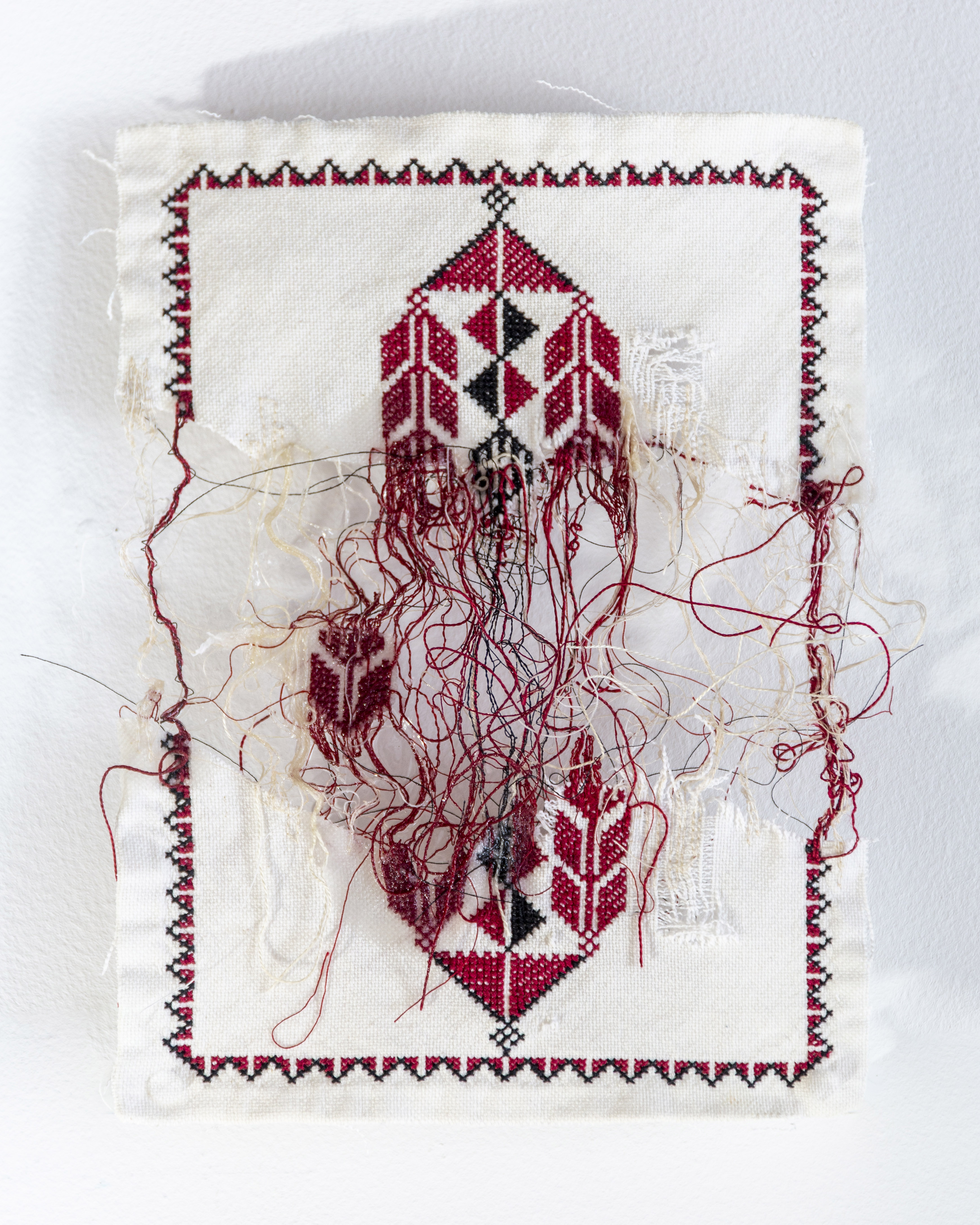
Samar initially studied architecture, but decided it wasn’t for her and then went into new media. She explored sculpture, video, embroidery, print-making, installation and textiles. “I was drawn to architecture because I liked creating spaces”, she says, “But I realised I cared more about creating experiences.” And, while much of her work is focused on embroidery, she didn’t embroider as a child. “I started doing embroidery as an exploration of my identity and trying to look to the conceptual side of self-identification”, she says, “I thought that taking my practice into a more traditional medium, especially tatreez which is very traditionally Palestinian and has become a form of resistance, I thought if I started practising then I’ll start to understand and explore the questions that I’m asking myself.”
Talking about being a Palestinian artist right now, she says that in general as an artist there is always an ethical responsibility. “As a Palestinian artist it becomes tricky because I don’t want to perpetuate certain narratives”, she says, “There’s a lot of misconception and there’s a lot of ways that we could be hurting ourselves and our community more so than actually helping us evolve.” Samar explains that much of her work has a lot to do with being Palestinian. “Even if it’s not overtly, it’s always about finding a new way to exist”, she explains, “A new way to break the ways we interpret how to live or how we interpret life or perception. It’s always this way of trying to go against the systems that are put into place that don’t benefit us. So how do you go against these ideologies that were taught that are not good for us. And how do we create new ways of meaning and existing within these materials.”
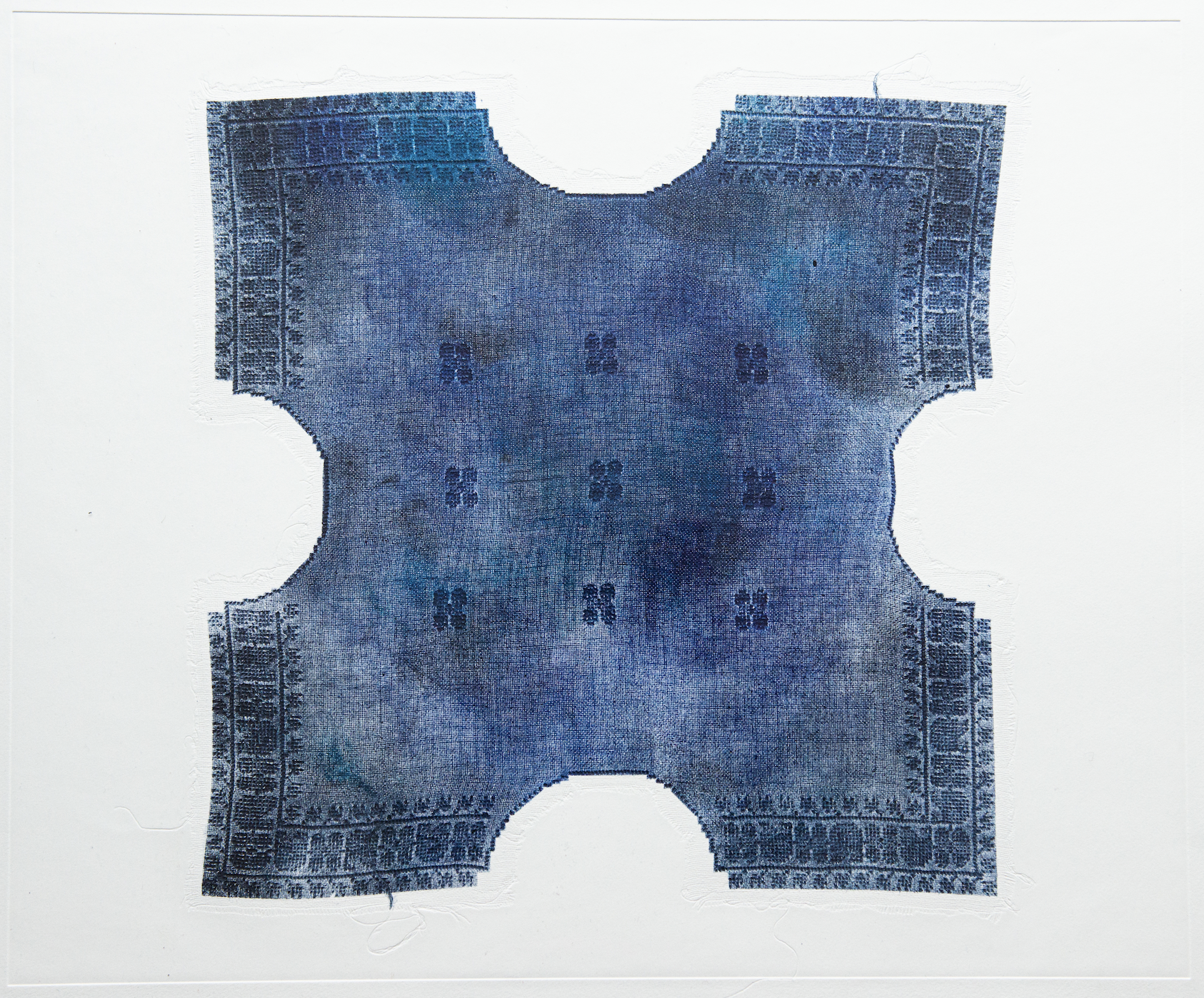
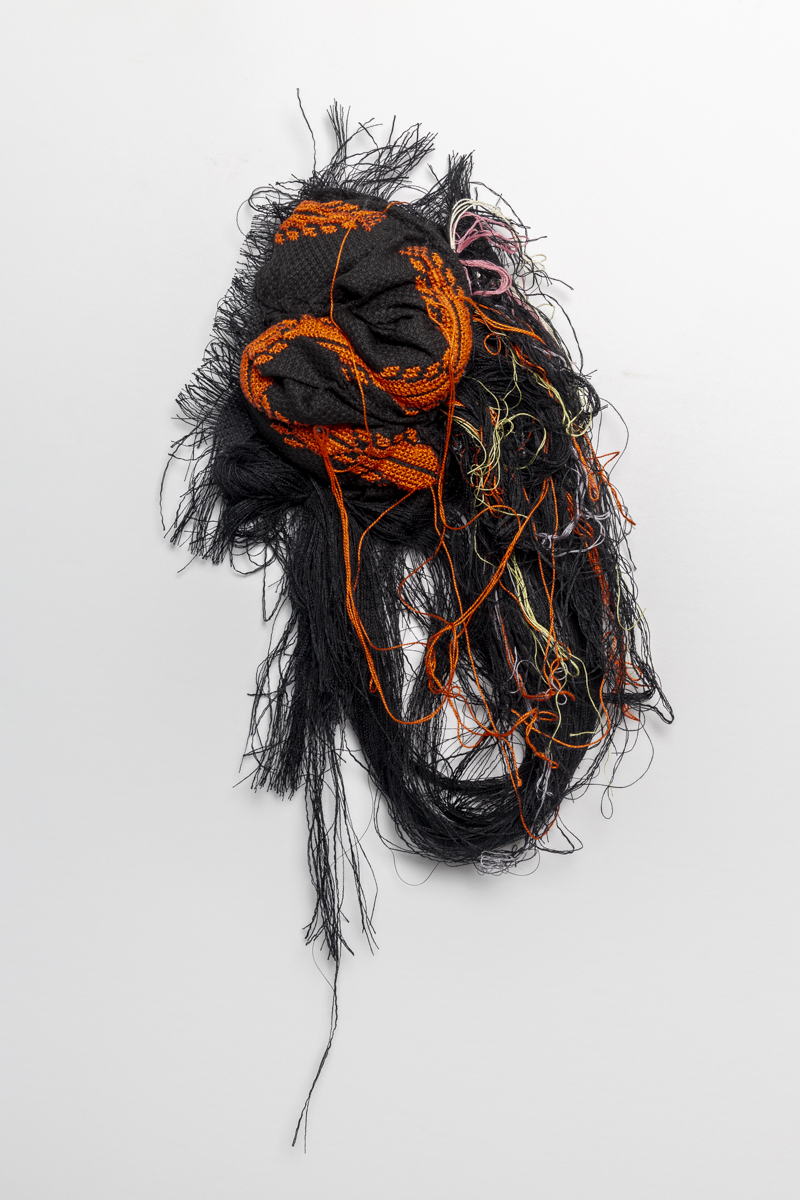
About the mediums she works with, she says each choice is intuitive. “I trust that my unconscious mind has a better idea of where I want to go than my conscious mind”, she says, “I’ll follow my intuition until I have an aha moment.” That said, she has been very drawn to textiles. “I like the way you really have to work with textiles. You can’t really control how it’s going to fall or if it’s going to hang right”, she says, “It gives that space for the variables of life that you don’t see.” Samar’s work is unique, because unlike most Palestinian embroidery, her work doesn’t have a “perfect” appearance. “Specifically with Palestinian embroidery there is this almost different need for it to be perfect. I always like to challenge rigid rules”, she says, “I like the fact that it looks fragile but it’s actually not. It looks delicate but it’s not. I like that there’s the way that it’s presented but then there’s so much that happens in between and underneath.

“There’s the weave of the fabric. There’s the thread that’s connecting. There’s the knots. All the things that we keep hidden but I find those are the more interesting things. It’s like being human. It’s so multilayered and intricate that taking them apart feels like a reflection of that.” Samar literally creates her works then takes them apart. “I don’t like when things look perfect. I feel like it loses the soul and its life”, she says, “In traditional Palestinian embroidery when they would make the traditional dresses they would intentionally make mistakes for superstitious reasons to deter the evil eye just so that it looks personalised. Those imperfections are in a weird way, kind of like a safety net or like an identity card in a way.”

Most recently Samar has had a large installation called “Transgressed Boundaries” on display at the Sharjah Islamic Arts Festival. “I was trying to explore what it means to be a part of a culture that doesn’t have a land”, she explains, “So taking away the fabric and seeing if the threads hold together and keep their shape.” The land functioned as the fabric and the embroidery and the threads functioned as the people and the community. Samar hung this from the ceiling with lights projecting outwards to cast a shadow. “When you move, it moves”, she adds, “It also talks about your experience and your perception is a role in how you explore and see the artwork.”
As for the future? “I’d love to show in museums and create larger works”, says Samar, “I’d love to work with stained glass.”
 gallerygirl.co