
On this episode of the Gallery Girl podcast I am joined by Amani AlThuwaini, a Kuwaiti mixed media artist and designer born in Ukraine. She believes that the cultural duality she inherited through her Kuwaiti-Ukrainian roots greatly influenced her unique awareness of identity and culture, impelling her to explore this in her work. She has exhibited extensively throughout London and Kuwait and has also shown her work in Prague, Dubai, Brazil and Bolivia among others.
Amani says that she’s known her whole life that she wanted to be an artist. “When I was still living in Ukraine I used to draw a lot. My grandmother used to keep all my drawings”, she explains, “She kept 200 drawings. When we moved to Kuwait, my mother brought them with her. She didn’t show me until I was nearly 16 years old.” She used to draw as a way of spending quality time with her grandmother. “She made me feel like there’s something very important in these drawings”, she adds, “It felt really exciting to do that with her.” Amani moved to Kuwait when she was 6, not knowing any Arabic or English, having to learn from scratch.
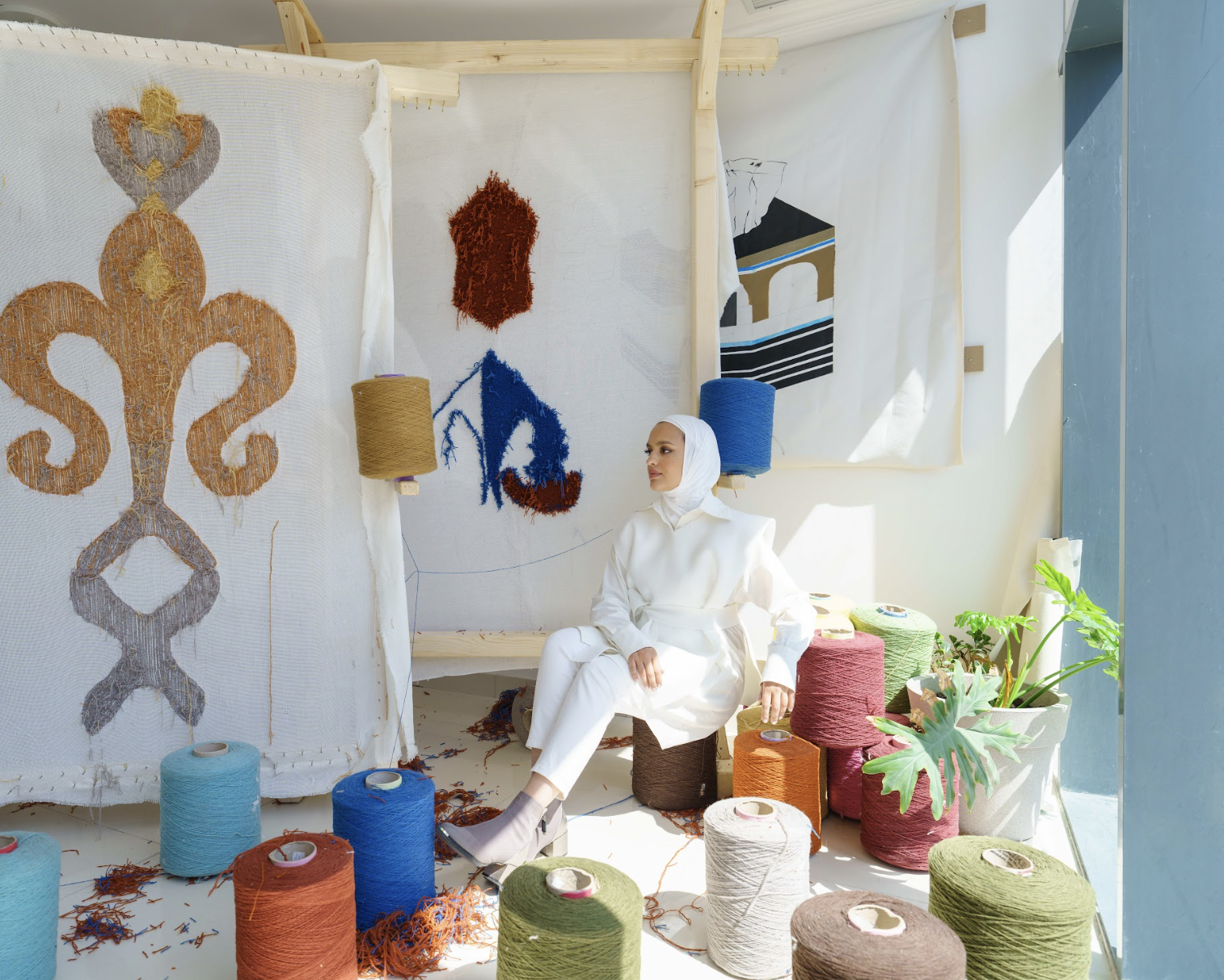
Speaking of her earliest memories of textiles, include huge ornamental carpets hanging in the walls in Ukrainian houses. “It was in my parent’s bedroom and I drew in solitude in that room”, she says, “I remember vividly this carpet in that room.” This love of drawing followed her to university, where she studied architecture. “I used to draw aerial views of parks and streets and buildings and the interiors of houses and furniture”, she says, “I was interested in many things, but we didn’t have any art schools so it was the closest thing to art that I could do. Architecture school helped me develop the way to analyse and plan and organise my thoughts, but also making sense of things in a very detailed analytical way.”

Amani has made a series of work commenting on the forms of the wedding dowry and how it has developed in terms of materials and has become more about global consumerism over time. “Each piece represents time in history, specific years or trends, depending on trade, trends and also the products or the gifts such as perfumes or brands” says Amani, “Everything influenced the forms of the dowry in the gulf, particularly in Kuwait. It’s kind of about the celebration of this tradition but also with a little bit of criticism on how people forget to make it personalised with the soul of the bride and the preciousness of the material and the craft.”
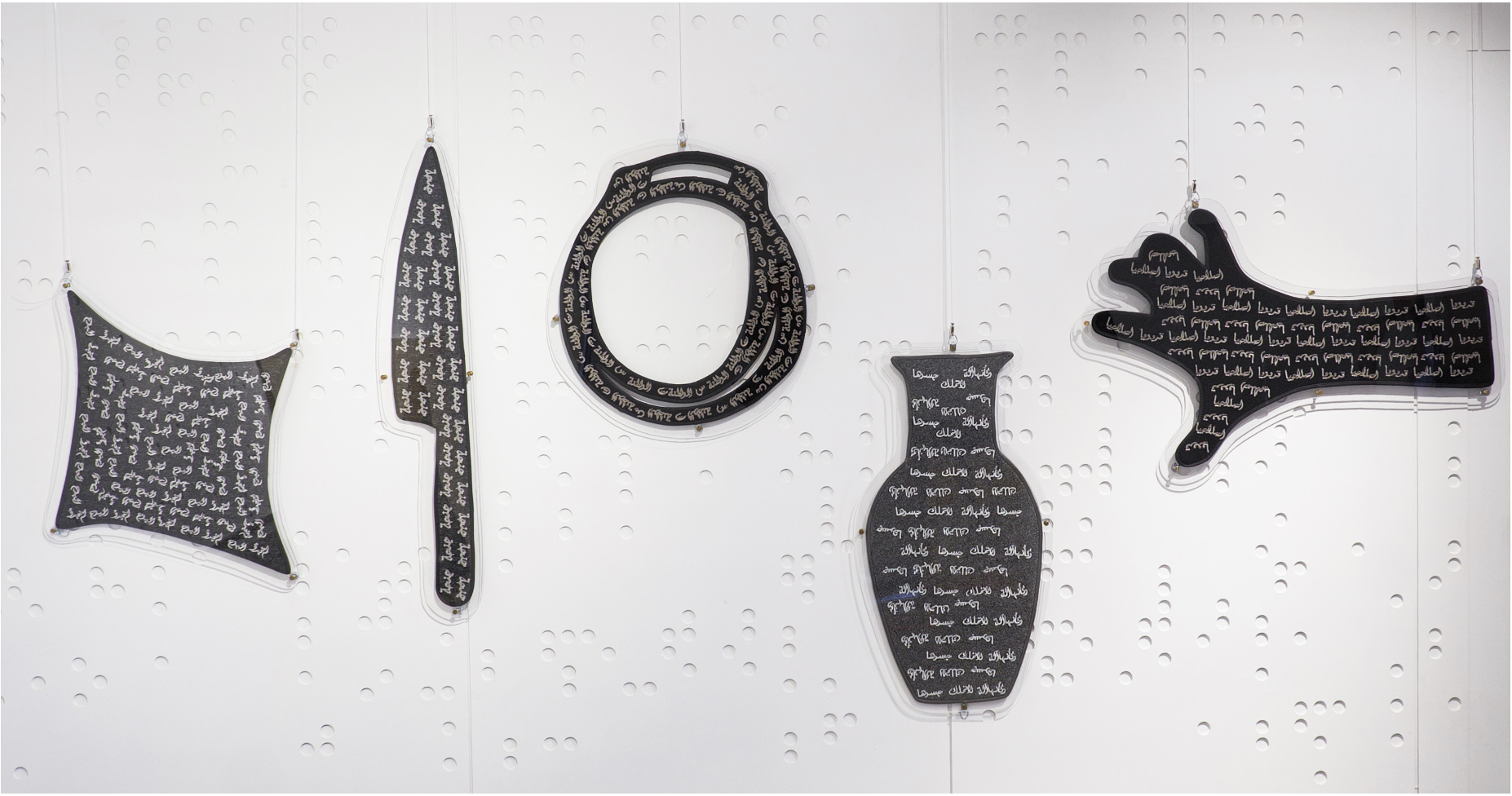
While Amani works with textiles, which have hundreds of years of tradition, she also works with modern technology. “For me it’s more interesting to mark the qualities of this period of time that we’re in”, she says, “Each of my artworks talk about specific moments in time and marking in history. So I feel it’s very important to utilise these technologies. It’s actually very inspiring because the possibilities are endless.” On the other side, she’s also worked with the Kuwaiti embroidery of Sadu. She worked directly with the weavers, listening to their stories. “I love that Sadu is a way of storytelling”, she adds, “I always try to think about the ways we can talk about our current times with this old technique and implement new ways of storytelling through this traditional material and way of creation.”
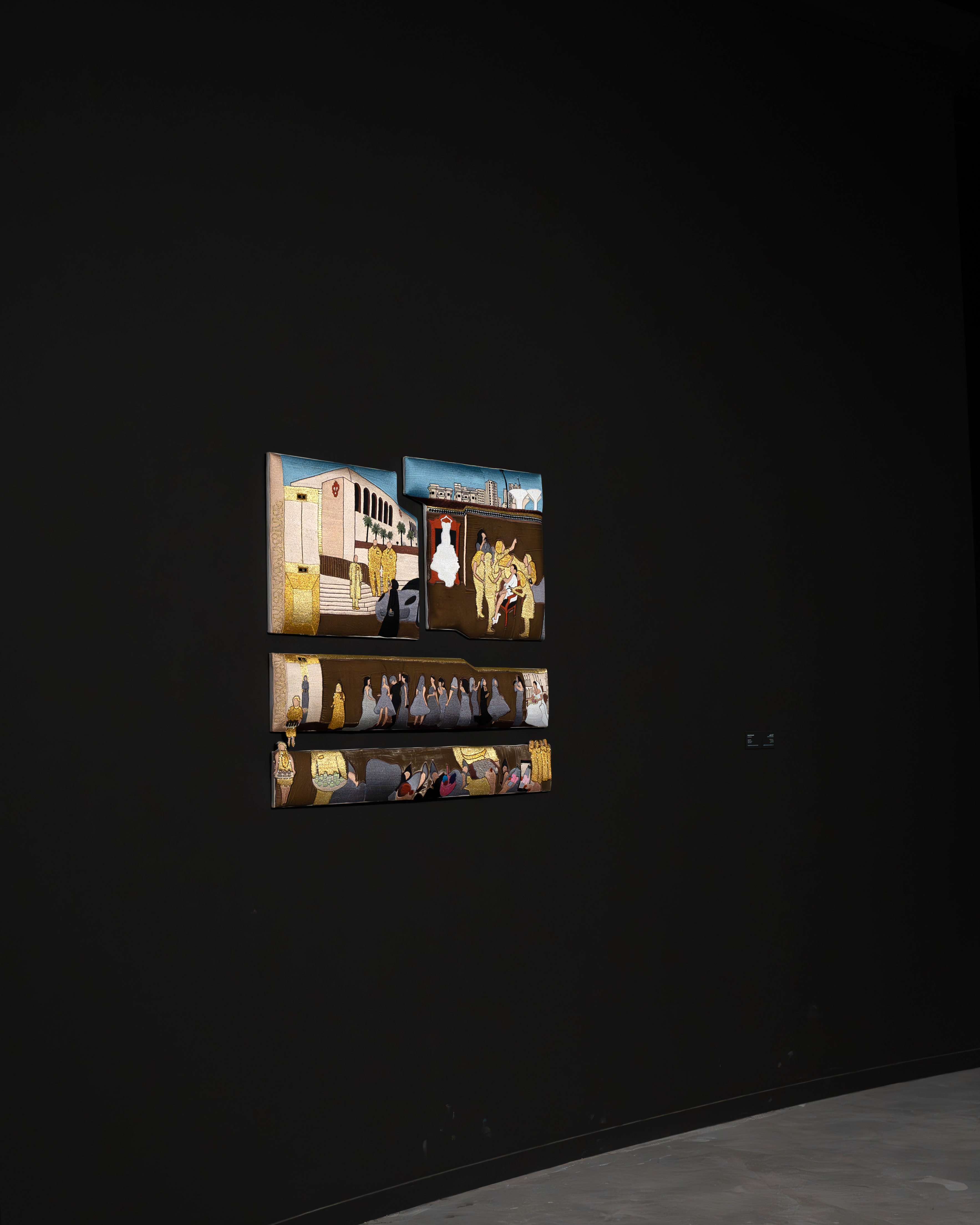
More recently, Amani has created a business called Dazza Lab that was created as a result of her art practice, as an extension of her work on dowries. “It let’s clients be a part of the process and personalise and think about something that the bride loves so that we can create a story through embroidered pieces”, she says, adding, “The usual way of personalising a gift like that is using her name or initials, but I want to dig deeper into what people really love and something sentimental. Stories of how the bride and group met, things like that.” Through Dazza Lab she is aiming to create timeless pieces that can also be used as furniture, while also functioning as research for her art practice.
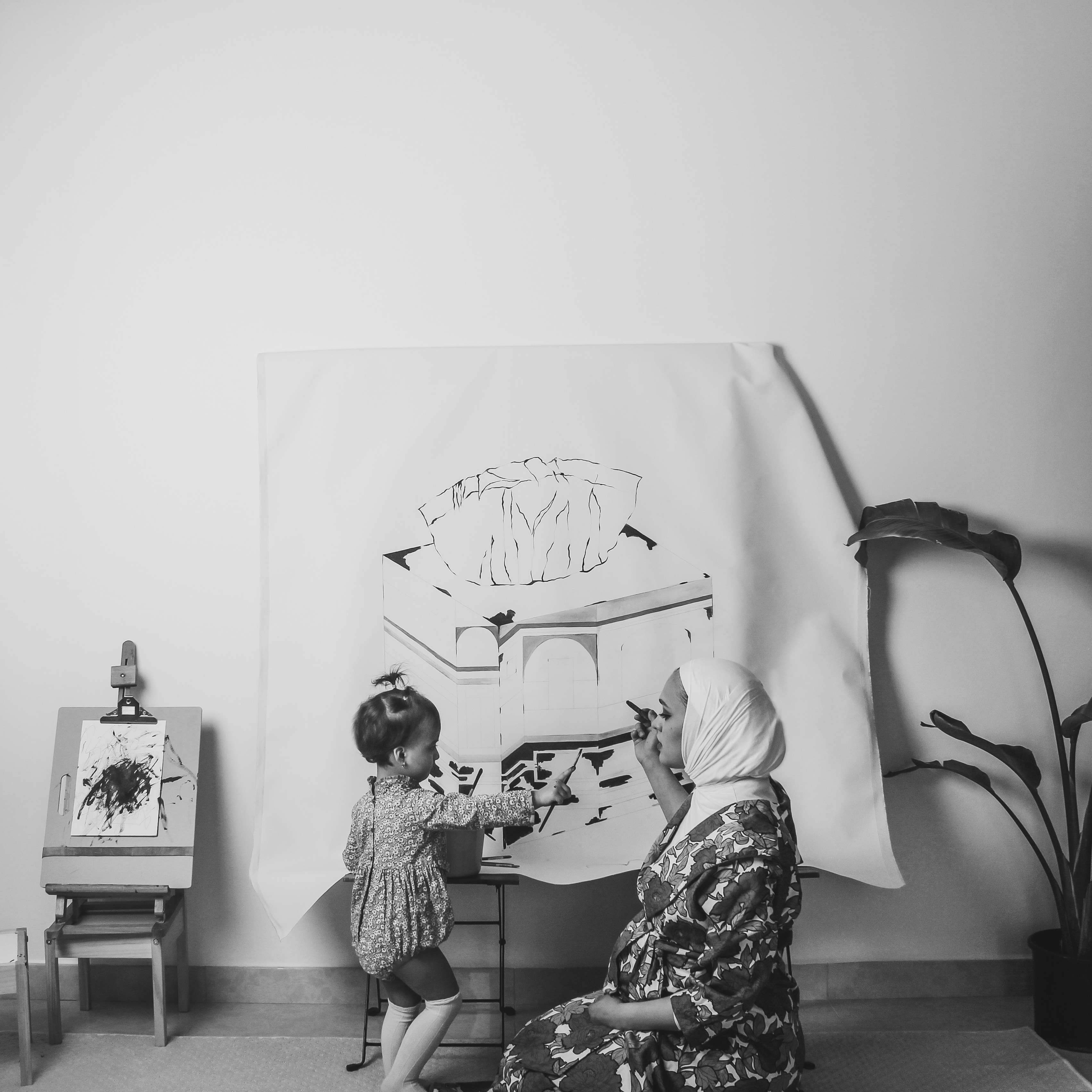
As for right now, Amani has just started working on a series focusing on motherhood, having just had three children in five years. “It only makes sense for me to make sense of things through my art”, she explains, “Every series of work that I make in a way is about my own life. For example, the dowry series started as a curiosity about dowries when I first received my dowry from my husband and his family.” She says this new series will share how she sees the chaos of motherhood, while also including some of the things that she saw as strange and absurd. “Motherhood is sometimes lived through the lens of the camera”, she adds, “We sometimes live that through our phones and making pictures. What we share with the world sometimes becomes more important about living the moment.”
And in the future? “I hope that I spend more time creating and being creative”, she says, “I am excited to develop new routines.”
 gallerygirl.co